Implications for Delivery
Automated traffic enforcement has been used in Great Britain for several decades. Detecting speed and red-light offences through technology has been shown to reduce levels of offending and reduced the number of casualties injured at sites. In a period where the number of dedicated roads policing officers has been declining, automated enforcement provides a method of detecting offences and improving road safety.
Despite opposition from a vocal minority, the evidence shows that an overwhelming majority (around 80%) of the public support more speed camera enforcement, particularly average speed cameras, when used to improve compliance and reduce casualties (Norbury, 2020).
Technology can be used to detect other offences than speed, including mobile phone use, non-seatbelt wearing, and through the use of Automatic Number Plate Recognition (ANPR) to help target the drivers that pose the greatest risk to road users.
Background
As detailed in the section on Speed Management Policy, energy management is central to the Safe System. The components of the Safe System need to work together to protect fragile humans from the harmful energy released during a collision.
Ensuring vehicle users drive below the posted speed limit is a key objective in managing energy. Automated enforcement technologies have been used in Great Britain for over 30 years, providing consistent and visible policing that, in the case of fixed and average speed cameras, brings 24-hour detection of speeding behaviour.
The difference between automated traffic enforcement and traditional roads policing is that automated technology records offences for processing later in a police back office. Traditional roads policing involves the officer stopping drivers at the time of the offence and deciding on action at the time (serving a ticket, providing advice, referring to court, or not taking action). The benefits of recording the offences for later processing include that officer time is not spent dealing with single motorists and that the same punishment can be applied equally to all offenders.
There are three main types of automated speed enforcement:
mobile cameras - where a police van or motorcycle is parked at the side of the road and uses a handheld camera to record offences
fixed (or spot-speed) cameras - where a camera is permanently installed at the side of the road, recording offences at a single location
average speed cameras - where two or more cameras are installed along a route, recording the average speeds driven between cameras, rather than speeds at a single point
In Scotland, Police Scotland Safety Cameras is the collective name for the three Safety Camera Units that operate across the country – North, East, and West, and which manage the administration for speed and red-light cameras. The units operate within Police Scotland and are funded via a grant from the Scottish Safety Camera Programme.
Speed or safety cameras have not always been popular with the public. A two-year pilot of early cameras identified potential road safety benefits from the use of cameras. However, expanded their use further was limited by a lack of finance, as the costs of running cameras was borne by local authorities and police forces. HM Treasury agreed to allow camera activity to be funded by ‘netting-off’ fines from camera offences, meaning the revenue from speeding tickets could be used locally to run the camera scheme and fund additional cameras. These links between the funding and enforcement were often controversial in the media, and some critics felt that there has been too much reliance on automated cameras, rather than using traditional roadside traffic policing.
Whilst there are still opponents of automated enforcement, support for speed cameras has increased over time, particularly as the benefits to road safety have become more evident. In 2005, when the scheme was expanding, only 47% of those asked whether “speed cameras save lives” agreed or strongly agreed. This increased to 60% in 2017 when the question was last asked in the British Social Attitudes Survey (Department for Transport, 2016).
Many studies have analysed the effectiveness of speed cameras. These identify improvements in compliance with the speed limit and also show reductions in the average speed where cameras have been used, resulting in reductions in casualties at camera sites.
Whilst most of the evidence is related to using automated enforcement to police speed limits, technology is also being used to detect seatbelt and mobile phone offences in the UK. There are also ‘speed on green’ cameras which detect vehicles jumping red lights but can also detect vehicles exceeding the speed limit. Analysis of red light camera programmes found reductions in red light violations and the number of injury collisions (Norbury, 2020).
Automatic Number Plate Recognition (ANPR) reads vehicle number plates through cameras. A computer system checks databases to see if the number plate is recorded for previous serious motoring offences and lack of insurance. Officers can then move to locate and stop the vehicle (Norbury, 2020).
What the Research Shows
In October 2010, the Cochrane Review of 35 studies into the effectiveness of speed cameras worldwide reported that:
“…the consistency of reported reductions in speed and crash outcomes across all studies show that speed cameras are a worthwhile intervention for reducing the number of road traffic injuries and deaths” (Allsop, 2010).
In 2010, Professor Allsop of University College London analysed various studies on safety cameras in Great Britain, alongside national statistics on traffic speeds, collisions, and casualties. He reported that at the 2,000 sites included in the four-year evaluation report of the safety camera programme, the following was found:
A substantial improvement in compliance with speed limits
A particular reduction in extreme speeding
A marked reduction in average speed at fixed sites and
An appreciable, though more modest, reduction at mobile sites (Allsop, 2010).
The study went on to estimate that in the year ending March 2004, camera operations across Great Britain prevented some 3,600 injury collisions, saving around 1,000 people from being killed or seriously injured (Allsop, 2010).
A new study, Owen et al. (2016), explored the effectiveness of average speed cameras (ASC). Whilst the first average speed camera system was installed in 2000, it took a while for many systems to be installed across Great Britain. There was a total of 51 ASC sites commissioned and installed between 2000 and 2015, with 12 of those installed in 2015 alone. This study analysed the collisions at these sites but also took the opportunity to introduce a scientific methodology not used in many previous studies. The study used comparator roads to look at general trends in collisions and used sites that had been selected for ASC but where cameras were not installed, as pseudo-control sites. Site-selection periods were also removed from pre-installation data, as criticism of camera performance has often focused on selecting sites based on a high level of collisions that would naturally reduce. After accounting for all of these factors, this study found that average speed camera sites reduced fatal and serious collisions by 25-46% and personal injury collision by 25-46% (Owen et al., 2016).
The Role of New Technology in Improving Road Safety: Enforcing Seatbelt and Mobile Phone Offences
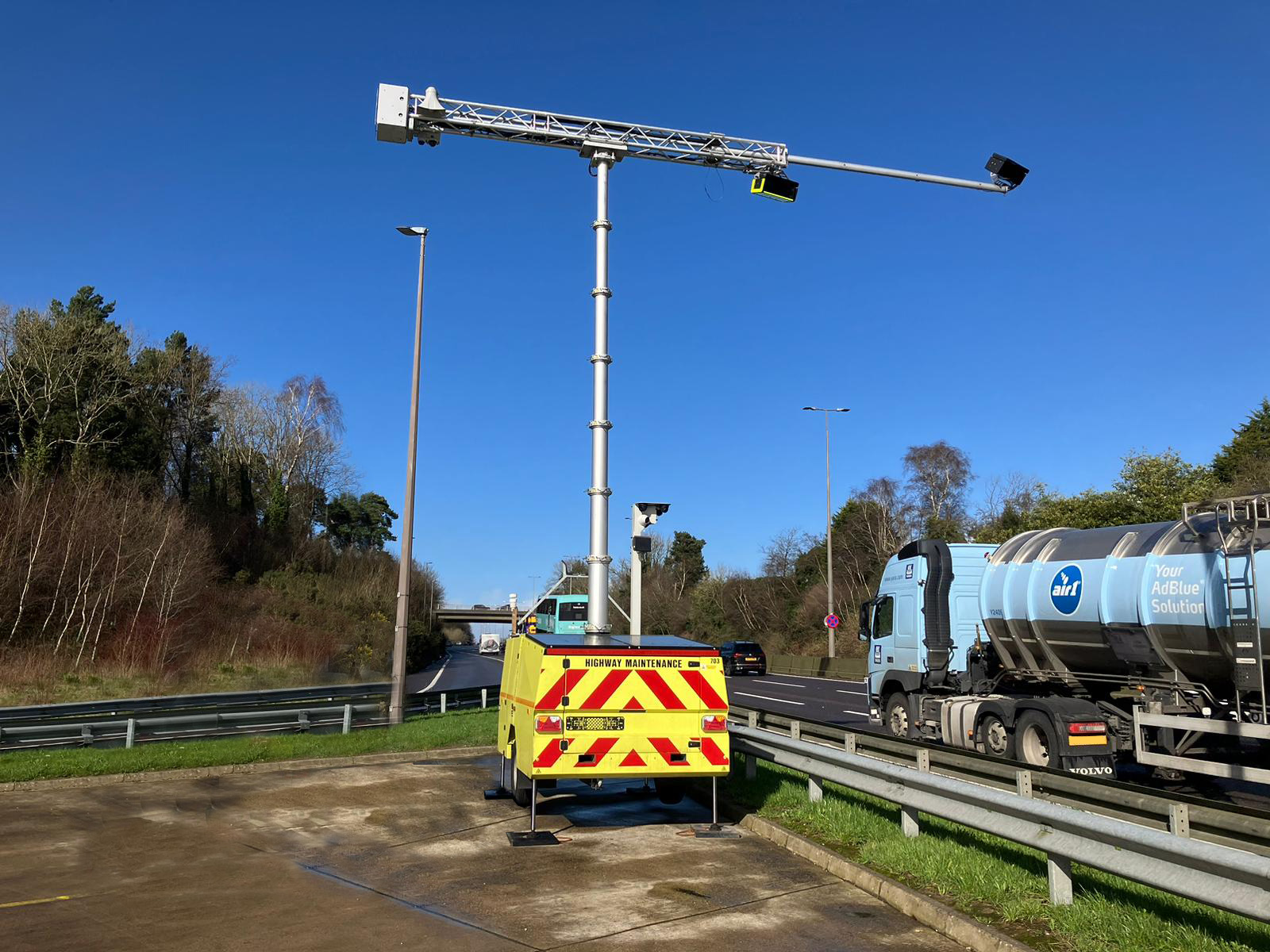
Recent advancements in artificial intelligence (AI) technology are transforming road safety enforcement across Britain. For example, in Devon and Cornwall, Acusensus ‘Heads-Up’ technology has been deployed over the past three years to detect drivers not wearing seatbelts or illegally using mobile phones. The system employs high-speed, front-facing and overhead cameras supported by AI detection algorithms to identify potential offences. Each detection is subsequently verified by at least two trained human reviewers, ensuring accuracy before any enforcement action is taken.
The introduction of this technology appears to be leading to significant behavioural change among road users. Data collected in August 2024 indicated a 50% reduction in seatbelt offences and a 33% reduction in mobile phone offences at monitored sites. Overall, less than one per cent of vehicles observed were found to be committing offences, suggesting high levels of compliance and a strong deterrent effect.
Police and road safety partners attribute these improvements to the visible and consistent use of camera enforcement, which supports the broader Vision Zero South West initiative. Between 2022 and 2024, Devon and Cornwall recorded a sustained decrease in serious road traffic casualties, from 790 to 678. This evidence underscores the growing role of innovative technologies in addressing dangerous driving behaviours, enhancing compliance, and ultimately saving lives on Britain’s roads.

Sources
Allsop, R. (2010). The effectiveness of speed cameras. A review of evidence. RAC Foundation
Soole, D. W., Watson, B. C., & Fleiter, J. J. (2013). Effects of average speed enforcement on speed compliance and crashes: A review of the literature. Accident Analysis & Prevention, 54, 46-56.
Owen, R., Ursachi, G., & Allsop, R. (2016). The effectiveness of average speed camera enforcement in Great Britain. RAC Foundation
GOV.UK | British social attitudes survey: 2016
Norbury, F. (2020) Roads policing and its contribution to road safety. PACTS