Implications for Delivery
To ensure a Safe System cultural transformation, leaders must first understand what the Safe System truly means. A good leader leads by example. They reflect the values, language, and actions they want to see in others. Leaders also shape the way safety is communicated. For example, if leaders use language such as ‘accidents’ rather than crashes or collisions, others in the organisation are likely to follow. These small choices in language can reflect deeper cultural beliefs about safety and responsibility on the road network.
Leadership does not only come from the top management. While senior leaders play a vital role in embedding the desired culture, meaningful change can come from leaders at all levels of an organisation.
The following are some steps that can be taken for driving transformation:
Engage with stakeholders: Start by listening. Understand your current culture including how people work, what routines they follow, and what might be helping or holding back progress. These insights help in identifying where change should be targeted.
Segment stakeholders: Once the cultural landscape is clearer, group stakeholders into categories such as innovators, early adopters, early majority, late majority, and sceptics. Focus on early adopters as they are pragmatic but open to change and can become strong internal champions who influence others.
Reinforce messages consistently: Reinforce your cultural ambitions across forums such as team meetings, onboarding new colleagues, mission and vision. Repetition and consistency help make culture stick.
Take a long–term view of the situation: Influencing culture takes time. Take a long–term outlook by considering a system of interventions that can be delivered and how can each intervention fit with the larger system.
Identify champions: Find individuals who already believe in and model the desired culture. These champions can motivate others, act as role models, and help sustain the Safe System culture throughout the organisation.
Background
Changing culture does not happen by chance, it requires deliberate action. Leadership plays a vital role in enabling or blocking progress towards embracing the Safe System. Leaders have the power to shape a culture where the Safe System is understood, prioritised and embedded across the organisation.
Across Scotland, leaders have the opportunity to set clear expectations, use the right language, and engage people in a shared vision for safer roads. Importantly, leadership is not limited to the top management in an organisation. It can come from anyone with the influence and motivation to drive change (Ford et al., 2021). This includes stakeholders across departments who act as champions of the Safe System, as ‘leadership is a process of influence’ (Walk, 2023).
The 2021 PwC Global Culture Survey found that 67% of participants mentioned that culture is more important than strategy or operations (PwC, 2021). In addition to this, the survey found that 72% of senior management respondents mentioned that culture is essential for driving change management initiatives. Thus, enabling your desired culture can not only help with systemic action across Scotland but it can also aid in other change management initiatives that your organisation envisions.
What the Research Shows
Organisational culture is a powerful foundation for enabling change. Leaders have a key role in shaping this culture and can act as catalysts for driving change (Spence, 2023). The culture we promote is reflected in our everyday actions not just our words. For example, if a leader encourages colleagues to walk or cycle to work but regularly drives short distances, the message loses credibility. Stakeholders follow actions more than words. Hence, it is essential for leaders to model the behaviour(s) they want to see.
To build the desired Safe System culture, leaders must reinforce cultural ambitions in multiple forums. This can include team meetings, other internal communications, outlining the mission and vision when onboarding new colleagues, and through the organisation’s mission and vision. It is also helpful to understand who to influence first. Figure 1 (adapted from Rogers, 2003) shows a bell-shaped curve segmenting stakeholders in to five types:
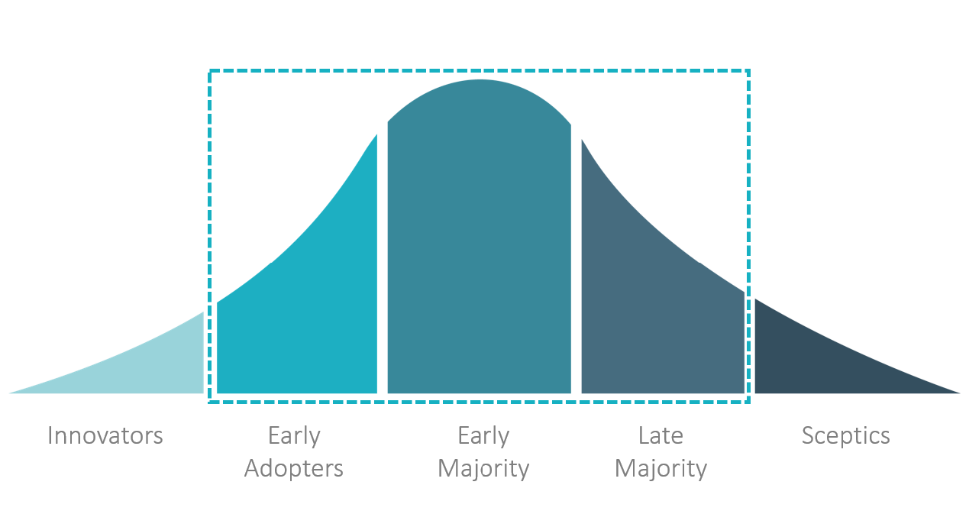
Figure 1. Adapted from Diffusion of Innovations (Everett Rogers, 2003)
Innovators: The first to adopt new ideas; they lead the way and set trends.
Early adopters: Practical and positive about change; they can help influence others. This is the ideal segment for creating internal champions and enabling transformation.
Early majority: More cautious; they adapt to changes once there is evidence that change works. Once the early majority have adapted, it helps build some momentum for change in the organisation.
Late majority: Sceptical and slow to adopt; they only accept the changes once it becomes the norm.
Sceptics: Resistant to change; unlikely to shift their views easily.
When leading cultural changes, it can be useful to focus on innovators and early adopters first. These groups can help influence the desired Safe System culture throughout the organisation.
In addition to this, here are some key steps that leaders can take:
Engage with stakeholders: Understand stakeholder perspectives and reasons behind the current culture. Diagnosing the right problem can help in finding targeted solutions.
Reinforce consistently: Use meetings, internal communications, and onboarding processes to reflect the desired culture.
Take a long-term view: Influencing culture is not a quick fix, it requires consistent action across the whole system. Reflect on the system of interventions that can be deployed for a cultural transformation in your organisation.
Identify right champions: Stakeholders that advocate and champion your desired change can be beneficial for transforming culture.
Overall, leadership is about more than authority, it is about influence, trust, and setting the right example. Leaders who truly demonstrate the Safe System vision through everyday actions can help turn it into everyday practice.
Sources
Ford, J., Ford ,Laurie, & and Polin, B. (2021). Leadership in the Implementation of Change: Functions, Sources, and Requisite Variety. Journal of Change Management, 21(1), 87–119. https://doi.org/10.1080/14697017.2021.1861697
PwC. (2021). Global Culture Survey 2021 [Www.pwc.com]. PwC. https://www.pwc.com/gx/en/issues/upskilling/global-culture-survey-2021.html
Rogers, E. M. (2003). Diffusion of Innovations, 5th Edition (5th Edition). Simon and Schuster.
Spence, J. (2023, October 6). How Leaders Influence Culture: The Crucial Role of Leadership in Shaping Organizational Culture - Business Leadership Today [Www.businessleadershiptoday.com]. https://businessleadershiptoday.com/how-leaders-influence-culture/
Walk, M. (2023). Leaders as change executors: The impact of leader attitudes to change and change-specific support on followers. European Management Journal, 41(1), 154–163. https://doi.org/10.1016/j.emj.2022.01.002